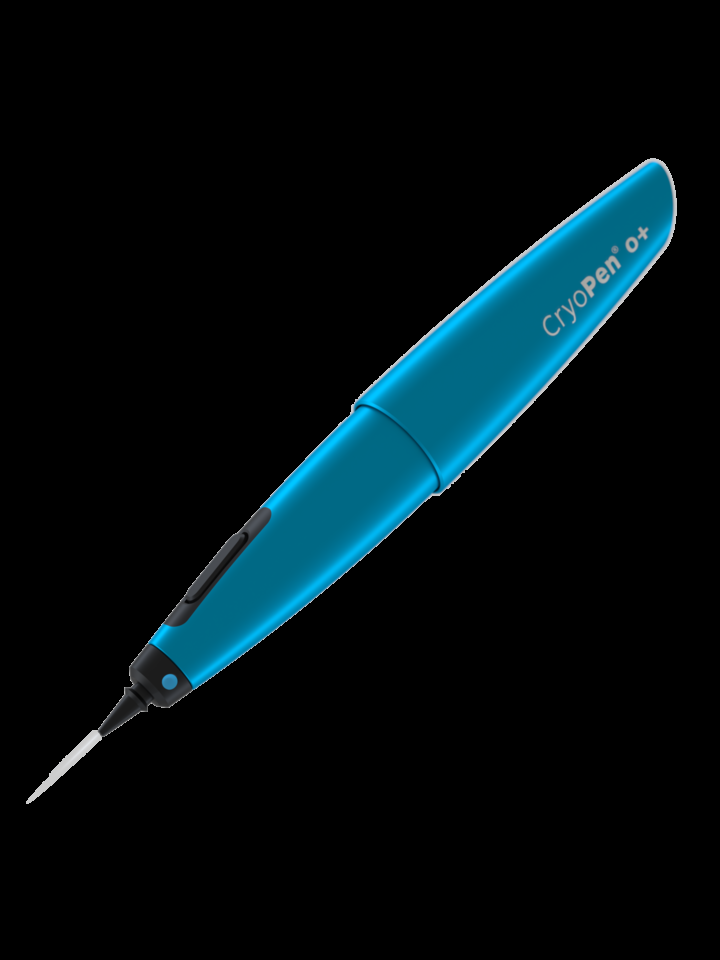
CryoPen
CryoPen uses advanced freezing innovation that is fast, effective and safe for the removal of benign skin lesions on your face or body. Suitable for clinical treatment of various benign skin lesions including skin tags, warts, pigmentation, angioma’s and many more. Offering minimal discomfort to patients and uses pinpoint accuracy without touching the skin.
- What does a CryoPen do? A versatile quick treatment option to remove lesions from 1mm to 10mm in size.
FAQs
Learn more about the Cryopen treatment and what will happen to your skin post-procedure.
Both hypopigmentation and hyperpigmentation may occur after cryotherapy, generally last a few months, but can be longer lasting. Please ask your practitioner about this before treatment.
Melanocytes are the most sensitive to cold injury. Therefore, they are the most easily damaged with cryotherapy. Darker-skinned patients need to consider the risk of permanent loss of pigment.
Typically, it leaves the least amount of scarring of any form of lesion removal because it causes the least damage to the connective tissues. Hypopigmented lesions will be noticeable until they darken.
Occasionally, a blister might form and persist for up to 5 days. After, it scabs over the lesions, healing depends on how deep the wound is. Typically, healing will occur from 2-6 weeks, depending on the length of freeze and location.
If the blister pops, the use of an antibiotic cleaning solution and ointment is recommended. Covering the area with a bandage also promotes healing
Most lesions will respond to a single treatment. However, some deeper lesions may take several aggressive treatments to get results.
For most lesions, cryotherapy is a permanent removal. Some lesions are harder to remove than others.
There are no limitations on activity except to protect the area from damage or abrasion. Swimming and showering are not a problem
Follow-up should be scheduled in 2-week intervals to observe results, and for further sessions if required.

Book a treatment
Book an initial consultation so that we can discuss your concerns and the options available. Existing patients are welcome to book additional consultations to discuss further treatment options.


